Having enough energy throughout the day is important for work, study, exercise, family activities, and daily responsibilities. Many people feel tired during the day and think that they need more coffee, energy drinks, or sugary foods to feel active. However, the food we eat has a direct connection with how our body produces and uses energy. Choosing healthy foods can help support steady energy levels and reduce feelings of tiredness.
Healthy eating does not mean following a strict diet or avoiding all the foods you enjoy. It means giving your body the nutrients it needs through balanced meals, fresh foods, whole grains, fruits, vegetables, healthy fats, and good sources of protein. When these foods become part of your daily routine, they can support better energy and overall health.
What Is the Connection Between Food and Energy?
The body needs energy to perform almost every activity. From walking and working to thinking and exercising, the body uses energy all day. Most of this energy comes from the food we eat.
Carbohydrates, proteins, and fats are the main nutrients that provide energy. Carbohydrates can be an important source of fuel for the body, especially during physical activity. Protein supports muscles and other body functions, while healthy fats provide energy and help the body absorb certain vitamins.
The quality of these nutrients also matters. Foods that contain refined sugar may give a quick rise in energy, but this feeling may not last long. On the other hand, meals that contain whole grains, protein, fiber, and healthy fats can help provide more lasting energy.
Eat a Balanced Breakfast
Breakfast can be an important part of a healthy eating routine. After going several hours without food during sleep, the body may benefit from a nutritious meal in the morning.
A balanced breakfast can include foods such as eggs, whole grain bread, oatmeal, yogurt, fruit, or nuts. Combining different food groups can help create a more satisfying meal.
For example, oatmeal with fruit and nuts provides carbohydrates, fiber, and healthy fats. Eggs with whole grain toast and vegetables can provide protein, carbohydrates, and important nutrients. A nutritious breakfast may help you feel more prepared for the morning instead of relying only on coffee or sugary foods.
Choose Complex Carbohydrates
Carbohydrates often receive negative attention, but they are an important source of energy. The key is choosing healthier carbohydrate sources.
Whole grains such as oats, brown rice, whole grain bread, and whole wheat pasta contain more fiber than many refined grain products. Fiber can help slow digestion and support more stable energy.
Fruits and vegetables are also excellent sources of carbohydrates along with vitamins, minerals, water, and other beneficial plant compounds. Including these foods in meals can support both energy and overall health.
Instead of depending mainly on sweets, cakes, sugary cereals, and highly processed snacks, try choosing whole grains, fruits, vegetables, beans, and other nutrient rich foods more often.
Include Protein in Your Meals
Protein is another important part of healthy eating. It helps maintain and repair body tissues and supports muscles. Foods such as eggs, fish, chicken, beans, lentils, yogurt, milk, nuts, and seeds can provide protein.
Adding protein to meals may also help you feel full for longer. For example, a meal containing vegetables, brown rice, and beans can be more satisfying than a meal based mainly on refined carbohydrates.
A protein rich snack can also be useful between meals. Yogurt with fruit, a boiled egg, or a small serving of nuts can be simple options.
Do Not Forget Healthy Fats
Healthy fats are an important source of energy and support several functions in the body. Foods such as avocados, nuts, seeds, olive oil, and fatty fish can provide beneficial fats.
Healthy fats can also make meals more satisfying. Adding a small amount of nuts to oatmeal or seeds to yogurt can improve the nutritional value of a meal.
This does not mean eating unlimited amounts of high fat foods. Fats contain a lot of energy, so portion size still matters. The goal is to include healthy sources of fat as part of a balanced diet.
Drink Enough Water
Hydration is another important factor when it comes to energy levels. Water is needed for many processes in the body. When you do not drink enough fluids, you may feel tired, uncomfortable, or less focused.
Drinking water regularly throughout the day can help support normal body functions. Your fluid needs can change depending on your activity level, weather, and other factors.
Instead of drinking sugary beverages throughout the day, water can be a simple choice. Milk and unsweetened drinks can also contribute to daily fluid intake.
Eat More Fruits and Vegetables
Fruits and vegetables provide vitamins, minerals, fiber, and other nutrients that support the body. A diet that includes a variety of colorful fruits and vegetables can help provide a broad range of nutrients.
Bananas, oranges, apples, berries, spinach, carrots, tomatoes, cucumbers, and many other fruits and vegetables can easily be included in everyday meals.
Adding vegetables to lunch and dinner and keeping fruit available for snacks can make healthy eating easier. Fresh, frozen, and properly prepared vegetables can all be useful choices.
Avoid Too Much Added Sugar
Sugary foods and drinks can provide energy quickly, but they may not be the best foundation for steady energy throughout the day. Eating large amounts of added sugar can also make it harder to maintain a balanced diet.
Foods such as candy, sweetened drinks, pastries, and many packaged desserts should be enjoyed in moderation. Replacing some sugary snacks with fruit, yogurt, nuts, or whole grain foods can improve the overall quality of your diet.
This does not mean you have to completely avoid your favorite treats. Healthy eating is about balance and consistency rather than perfection.
Eat Regular Meals
Skipping meals can make some people feel tired or overly hungry later in the day. Eating regular balanced meals can make it easier to provide the body with nutrients throughout the day.
Meal timing can be different for everyone. Some people prefer three main meals, while others feel better with smaller meals and healthy snacks. The important thing is to develop a routine that supports your lifestyle and nutritional needs.
Planning meals in advance can also reduce the chance of choosing unhealthy foods when you become extremely hungry.
Choose Healthy Snacks
Snacks can be helpful when you need food between meals. The best snacks are usually those that provide useful nutrients rather than only added sugar.
A piece of fruit with nuts, yogurt with berries, whole grain crackers with hummus, or a boiled egg can be simple options. These foods can provide a combination of nutrients that may help keep you satisfied.
Keeping healthy snacks at home, at work, or in your bag can make better choices more convenient.
Limit Highly Processed Foods
Highly processed foods can be convenient, but eating too many of them may make it harder to maintain a balanced diet. Many processed snacks contain high amounts of added sugar, sodium, or unhealthy fats while providing fewer beneficial nutrients.
You do not have to remove every processed food from your diet. Instead, focus on eating more whole and minimally processed foods while enjoying packaged foods in moderation.
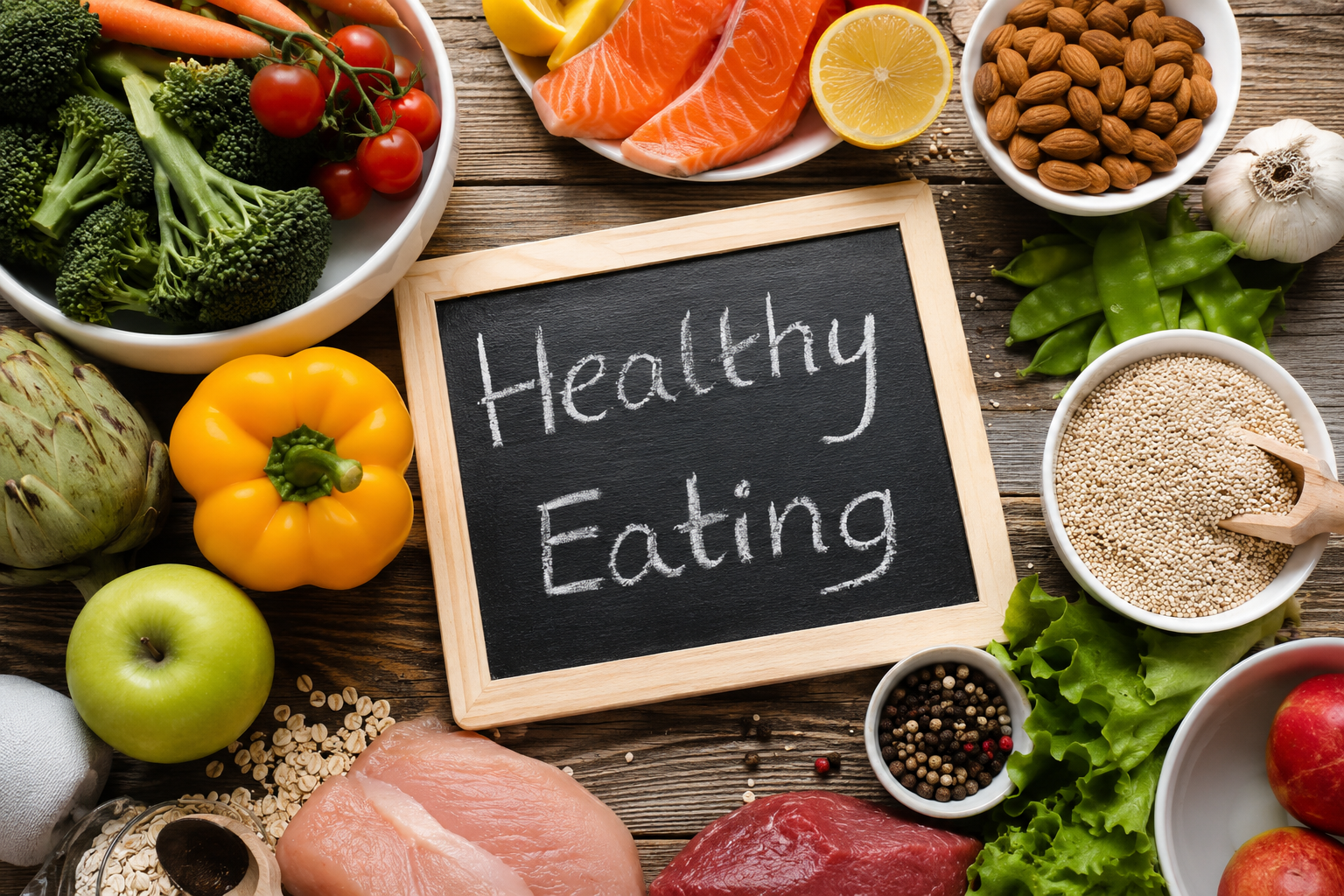
Simple meals prepared with vegetables, whole grains, beans, eggs, fish, chicken, fruits, nuts, and seeds can provide a strong nutritional foundation.
Healthy Eating Can Support Better Focus
Food affects more than physical energy. Good nutrition can also support normal brain function. When you eat balanced meals and stay hydrated, you may find it easier to maintain concentration during daily activities.
A lunch that combines whole grains, vegetables, protein, and healthy fats can be more satisfying than a meal made mostly from sugary foods. Choosing nutritious foods regularly can support your body and mind throughout the day.
Build Healthy Eating Habits Slowly
You do not need to change your entire diet in one day. Small changes can become meaningful over time. Start by adding one extra serving of vegetables, drinking more water, choosing whole grains, or replacing one sugary snack with fruit.
As these changes become habits, you can continue improving your meals. The goal is to create a healthy eating routine that you can maintain for a long time.
It is also important to remember that tiredness can have many causes. Poor sleep, stress, lack of physical activity, illness, and other factors can affect energy levels. If you regularly feel extremely tired despite eating well and getting enough rest, speaking with a healthcare professional can be helpful.
Conclusion
Healthy eating can play an important role in supporting steady energy levels and overall well being. A balanced diet that includes whole grains, fruits, vegetables, protein, healthy fats, and enough water can give the body important nutrients for daily activities.
Instead of depending on sugary foods or excessive caffeine for quick energy, focus on nutritious meals and regular eating habits. Simple choices such as eating a healthy breakfast, drinking enough water, including protein, choosing complex carbohydrates, and eating more fruits and vegetables can make a positive difference.
Healthy eating is not about being perfect. It is about making better food choices consistently and giving your body the nourishment it needs. With simple daily habits, nutritious food can become a natural part of your lifestyle and help you feel more active, focused, and ready to handle your day.