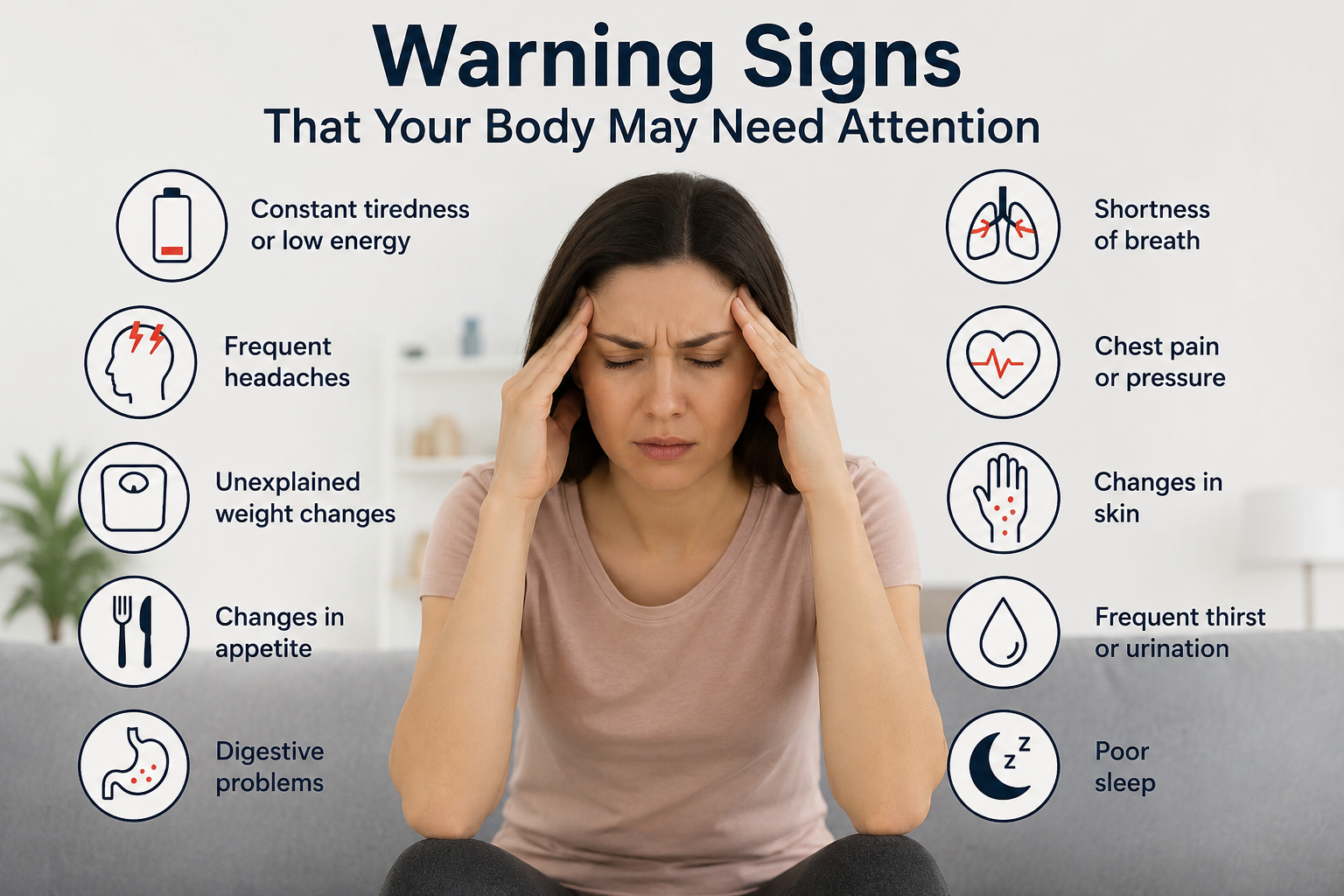
Our body is always communicating with us, but many people ignore small changes until they become serious problems. Feeling tired, having unusual pain, changes in appetite, or noticing changes in the skin can sometimes be the body’s way of asking for attention. While not every symptom means that something is seriously wrong, paying attention to unusual changes can help you take better care of your health.
Understanding the warning signs that your body may need attention is an important part of healthy living. Early awareness can encourage you to improve your daily habits or speak with a healthcare professional when necessary. This article explains common body warning signs and why you should not ignore them.
Constant Tiredness and Low Energy
Feeling tired after a busy day is normal. However, constant tiredness that does not improve after proper sleep may deserve attention. Low energy can be connected with poor sleep habits, stress, an unhealthy diet, dehydration, or a lack of physical activity.
In some cases, ongoing fatigue may also be associated with health conditions such as anemia, thyroid problems, infections, or other medical concerns. If you regularly feel exhausted without an obvious reason, consider looking at your sleeping pattern, diet, stress levels, and daily routine. If the problem continues, talking with a healthcare professional can help identify the possible cause.
Frequent Headaches
Occasional headaches are common and can happen because of stress, dehydration, lack of sleep, hunger, or spending too much time looking at screens. However, frequent headaches or headaches that feel different from your usual pattern should not always be ignored.
Pay attention to when your headaches happen and whether they are becoming more frequent or severe. A headache that appears suddenly and severely, especially when accompanied by confusion, weakness, fainting, vision problems, or difficulty speaking, requires urgent medical attention.
Unexplained Weight Changes
Changes in body weight can happen because of changes in diet, exercise, stress, or lifestyle. However, unexplained weight loss or weight gain may be a warning sign that your body needs attention.
If you are losing weight without trying or gaining weight despite maintaining your usual habits, it is useful to consider other symptoms you may be experiencing. Changes in appetite, digestion, energy levels, sleep, or mood can provide additional clues. Persistent unexplained weight changes should be discussed with a healthcare professional.
Changes in Appetite
Your appetite can naturally change from time to time. Stress, physical activity, sleep, and daily routines can influence how much you want to eat. However, a major or lasting change in appetite may deserve attention.
A sudden loss of appetite can occur during illness or emotional stress. On the other hand, an unusually strong appetite may also be connected with changes in your health or lifestyle. If appetite changes continue for several weeks or happen along with unexplained weight changes, weakness, or digestive problems, consider seeking professional advice.
Digestive Problems
Your digestive system can provide useful information about your overall health. Occasional bloating, constipation, diarrhea, or stomach discomfort can happen because of food choices, stress, or temporary illness.
However, persistent digestive problems should not be ignored. Regular abdominal pain, ongoing diarrhea, severe constipation, frequent vomiting, blood in the stool, or major changes in bowel habits can require medical evaluation.
Eating a balanced diet with enough fiber, drinking adequate water, staying active, and paying attention to foods that cause discomfort can support digestive health. Persistent symptoms should be evaluated rather than treated only with home remedies.
Shortness of Breath
Feeling short of breath after intense exercise can be normal, especially if you are not physically active. But unexplained breathing difficulties during normal activities or while resting may need attention.
Shortness of breath can have many possible causes, including respiratory problems, heart related conditions, anxiety, infections, and other health concerns. If breathing difficulty is sudden or severe, especially when combined with chest pain, fainting, confusion, or blue colored lips, seek emergency medical care.
Chest Pain or Pressure
Chest discomfort is one of the symptoms that should never be casually ignored. Although chest pain can sometimes result from indigestion, muscle strain, or anxiety, it can also be associated with serious heart or lung problems.
If chest pain is severe, persistent, or accompanied by sweating, nausea, difficulty breathing, dizziness, or pain spreading to the arm, back, neck, or jaw, seek emergency medical attention immediately. It is better to take serious symptoms seriously rather than assume they will disappear.
Changes in Skin
The skin can sometimes reveal changes happening inside the body. New rashes, unusual dryness, persistent itching, changes in skin color, or wounds that do not heal normally can be worth discussing with a healthcare professional.
Pay particular attention to new or changing moles. Changes in size, shape, color, or appearance should be checked by a qualified medical professional. Regularly observing your skin can help you notice changes early.
Frequent Thirst and Urination
Drinking more water after exercise or during hot weather is completely normal. However, unusual and persistent thirst combined with frequent urination may be a reason to seek medical advice.
These symptoms can have several causes, including changes in blood sugar levels and other health conditions. If you notice these symptoms regularly, especially along with unusual tiredness or unexplained weight changes, speak with a healthcare professional.
Poor Sleep
Sleep is essential for physical and mental health. If you regularly struggle to fall asleep, wake up repeatedly, wake up too early, or feel exhausted despite spending enough time in bed, your sleep quality may need attention.
Poor sleep can affect concentration, mood, energy, memory, and daily performance. Creating a regular bedtime routine, limiting excessive screen use before sleep, keeping the bedroom comfortable, and avoiding large meals close to bedtime may help. Persistent sleep problems should be discussed with a healthcare professional.
Mood and Mental Changes
Your mental wellbeing is also an important part of overall health. Feeling stressed or sad occasionally is a normal part of life. However, lasting changes in mood, motivation, concentration, or behavior deserve attention.
If you feel unusually anxious, hopeless, irritable, withdrawn, or unable to enjoy activities that normally make you happy, consider speaking with a trusted person or healthcare professional. Mental health deserves the same attention as physical health.
Muscle and Joint Pain
Minor muscle soreness after physical activity is common. But persistent pain, swelling, stiffness, or weakness without an obvious cause may be a warning sign.
Keeping track of when the pain started, what makes it better or worse, and whether other symptoms appear can be useful when discussing it with a healthcare professional. Avoid ignoring severe or worsening pain simply because it started as a minor discomfort.
Changes in Vision
Eyesight can change gradually with age, but sudden changes in vision should receive attention. Blurred vision, double vision, flashes of light, loss of vision, or unusual eye pain can sometimes indicate an eye or neurological problem.
If vision changes suddenly or significantly, seek prompt medical evaluation. Regular eye examinations can also help identify certain problems before they become more serious.
Slow Healing
Small cuts and minor injuries usually heal with time. If wounds repeatedly take a long time to heal, become unusually swollen, or show signs of infection, your body may need additional attention.
Good nutrition, proper hygiene, and appropriate wound care support normal healing. However, wounds that do not improve should be evaluated by a healthcare professional, especially if you have other health concerns.
When You Should Seek Medical Help
Not every body change requires immediate medical care. Sometimes symptoms are temporary and improve with rest, hydration, better nutrition, or lifestyle changes. The important thing is to recognize when a symptom is unusual, persistent, severe, or getting worse.
Seek urgent medical help for symptoms such as severe chest pain, serious breathing difficulty, sudden weakness, sudden confusion, loss of consciousness, severe bleeding, or sudden major changes in vision. For less urgent but persistent symptoms, arrange an appointment with a healthcare professional for proper evaluation.
How to Pay Better Attention to Your Body
Taking care of your health does not mean worrying about every small symptom. Instead, it means becoming familiar with your normal condition and noticing meaningful changes.
Keep a simple record of unusual symptoms, including when they started, how often they occur, and whether anything makes them better or worse. Maintain healthy eating habits, drink enough water, stay physically active, get enough sleep, manage stress, and attend recommended health checkups.
These habits can help you understand your body better and support overall wellness.
Final Thoughts
The warning signs that your body may need attention can be different for every person. Constant tiredness, unexplained weight changes, frequent headaches, digestive problems, breathing difficulties, chest discomfort, skin changes, poor sleep, and mood changes are some signs that should not automatically be dismissed.
Listening to your body does not mean assuming the worst. It means recognizing unusual changes and taking sensible action. A healthy lifestyle can support your body, while professional medical advice can help determine the cause of persistent or concerning symptoms.
Your body works every day to keep you healthy. Giving attention to its signals is one of the simplest ways to become more aware of your health and make better decisions for your future.